Zahnmedizin
Dental Implants vs. Dental Bridges: Which Option Is Right for You?
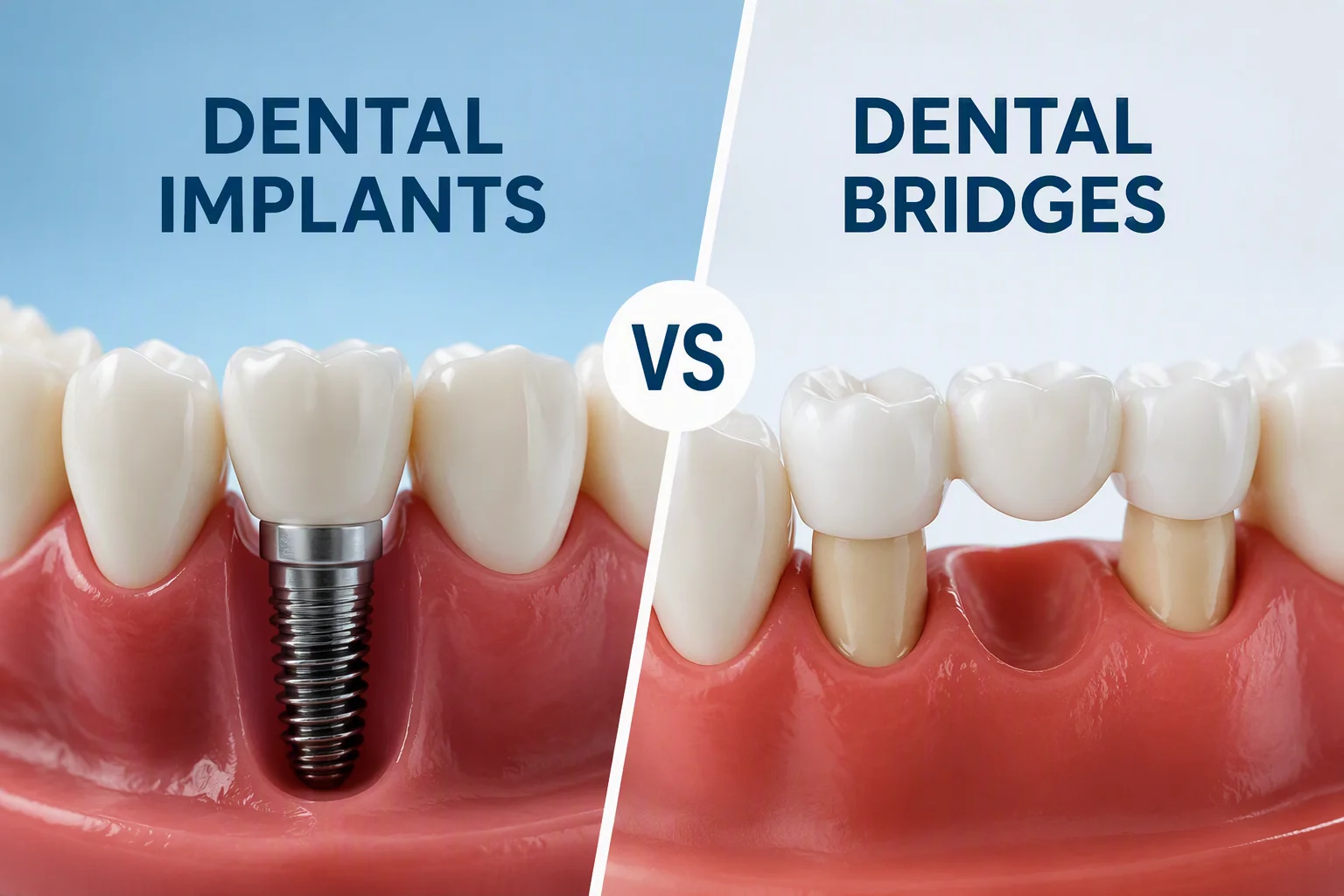
Dental Implants vs. Dental Bridges: Which Tooth Replacement Option Is Right for You?
Losing a tooth can affect more than just your smile. It can impact your ability to chew comfortably, speak clearly, and maintain the health of your surrounding teeth. Fortunately, modern dentistry offers reliable solutions to replace missing teeth, with dental implants and dental bridges being the two most common options.
While both treatments restore your smile and improve oral function, they differ significantly in terms of procedure, longevity, maintenance, and cost. Understanding these differences can help you make an informed decision together with your dentist.
What Is a Dental Implant?
A dental implant is a permanent tooth replacement that consists of three parts:
- A titanium implant placed into the jawbone
- An abutment that connects the implant to the restoration
- A custom-made dental crown that looks and functions like a natural tooth
Once the implant fuses with the jawbone through a process called osseointegration, it becomes a stable foundation for the replacement tooth.
Advantages of Dental Implants
- Preserves jawbone and helps prevent bone loss
- Does not require altering neighboring healthy teeth
- Looks and feels like a natural tooth
- Can last 20 years or more with proper care
- Provides excellent chewing strength and stability
- Easy to clean with regular brushing and flossing
- Potential Drawbacks
- Higher upfront cost
- Requires minor oral surgery
- Healing period may take several months before the final crown is placed
- Requires sufficient jawbone volume or bone grafting in some cases
What Is a Dental Bridge?
A dental bridge replaces one or more missing teeth by attaching an artificial tooth (or teeth) to crowns placed on the neighboring natural teeth.
Unlike implants, bridges do not replace the tooth root. Instead, they rely on adjacent teeth for support.
Advantages of Dental Bridges
- Usually completed in two to three dental visits
- Lower initial cost than implants
- No surgical procedure required
- Effective solution for many patients who are not candidates for implants
- Potential Drawbacks
- Healthy neighboring teeth must be reshaped
- Does not prevent jawbone loss beneath the missing tooth
- Average lifespan is around 10–15 years
- More difficult to clean underneath than a single implant
- Dental Implant vs. Bridge: Side-by-Side Comparison
- Feature Dental Implant Dental Bridge
- Lifespan 20+ years (often lifetime) 10–15 years
Which Option Looks More Natural?
Both implants and bridges can produce beautiful, natural-looking results when created with modern ceramic materials.
However, dental implants often provide a more natural appearance because they emerge directly from the gums, closely mimicking a natural tooth. They also help preserve the surrounding bone and gum tissue, which contributes to a healthier-looking smile over time.
Which Option Lasts Longer?
Dental implants generally offer superior long-term durability.
With excellent oral hygiene and regular dental checkups, implants can last decades and, in many cases, a lifetime.
Dental bridges are also durable but typically require replacement after 10 to 15 years due to wear, decay affecting the supporting teeth, or changes in the surrounding gums.
Cost Considerations
Many patients initially choose a bridge because it usually costs less upfront.
However, it's important to consider the long-term picture.
Although implants require a larger initial investment, they often last significantly longer and may reduce the need for future replacements or additional dental work. Over time, they can prove to be the more cost-effective solution.
Every patient's situation is unique, so your dentist can provide a personalized treatment estimate based on your oral health and treatment goals.
Who Is a Good Candidate for Dental Implants?
You may be a good candidate if you:
- Have one or more missing teeth
- Have healthy gums
- Have adequate jawbone to support an implant
- Are in good general health
- Do not smoke heavily, or are willing to quit during healing
Even if you have experienced bone loss, procedures such as bone grafting may make implants possible.
Who May Benefit More from a Dental Bridge?
A dental bridge may be the better choice if:
- You prefer to avoid surgery
- You need a faster solution
- Your neighboring teeth already require crowns
- Your medical condition makes implant surgery unsuitable
- Budget is your primary concern
Frequently Asked Questions
Are dental implants painful?
-Most patients report surprisingly little discomfort. Implant placement is performed under local anesthesia, and mild soreness afterward is usually manageable with over-the-counter pain medication.
Can a bridge be replaced with an implant later?
-Yes. Many patients who initially receive a bridge later choose an implant when the bridge eventually needs replacement.
Which option feels more like a natural tooth?
-Dental implants generally provide the closest experience to a natural tooth because they are anchored directly into the jawbone.
Can I eat normally with both options?
-Yes. Both treatments restore chewing function, although implants typically provide greater stability and biting strength.
How do I clean a dental bridge?
-Bridges require daily cleaning underneath the artificial tooth using floss threaders or specialized interdental cleaning tools. Implants are cleaned similarly to natural teeth with brushing and flossing.
Final Thoughts
Both dental implants and dental bridges are excellent solutions for replacing missing teeth, and the right choice depends on your oral health, lifestyle, timeline, and budget.
If you're looking for the most durable, bone-preserving, and natural-feeling option, a dental implant is often considered the gold standard.
If you need a faster, non-surgical, or more affordable treatment, a dental bridge may be the ideal solution.
The best way to determine which option is right for you is through a comprehensive dental examination. Your dentist can evaluate your oral health, discuss your goals, and recommend the treatment that offers the best long-term outcome for your smile.
In diesem Artikel erwähnt
Behandlungen
Bereit, Ihre Behandlung zu planen?
Fordern Sie ein kostenloses, unverbindliches Angebot von unseren geprüften Balkan-Kliniken an. Transparente Preise, Concierge-Service.