Zahnmedizin
How Long Do Dental Implants Really Last?
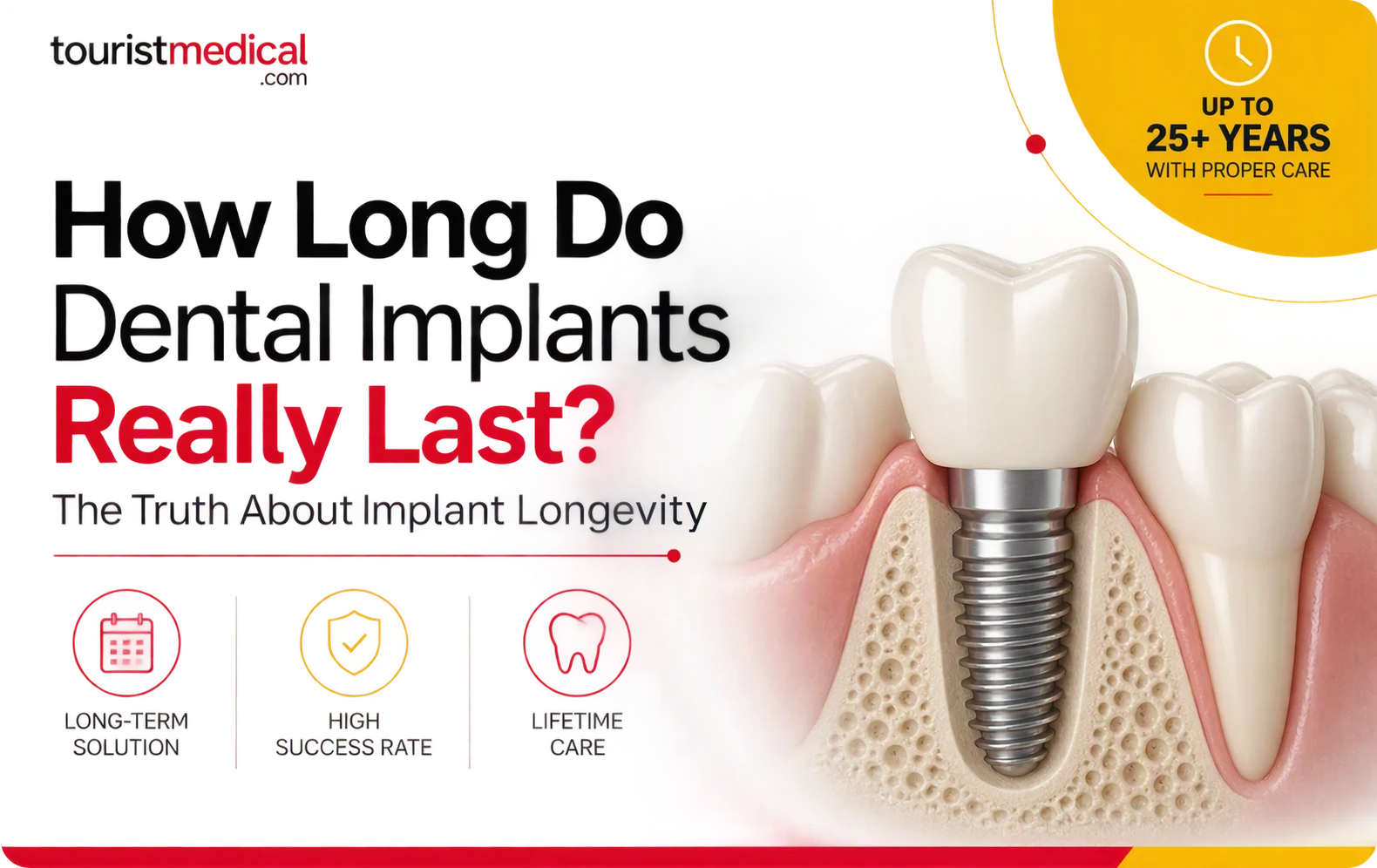
How Long Do Dental Implants Really Last?
If you're considering dental implants, one of the first questions that probably comes to mind is: How long will they last?
After all, dental implants are an investment in your health, confidence, and quality of life. The good news is that dental implants are among the most durable and reliable solutions available in modern dentistry.
With proper care, a dental implant can last for decades and, in many cases, for the rest of a patient's life.
Understanding the Parts of a Dental Implant
Before discussing longevity, it's important to understand that a dental implant consists of multiple components.
The implant itself is a titanium post that is surgically placed into the jawbone and acts as an artificial tooth root. On top of the implant sits an abutment, which connects the implant to the visible restoration, usually a crown. ** These components have different lifespans:**
The implant post can often last a lifetime. The dental crown typically lasts between 10 and 15 years before it may need replacement due to normal wear. The abutment can often last as long as the implant itself. Why Do Dental Implants Last So Long? ** The secret lies in a process called osseointegration.**
After placement, the jawbone naturally grows around the titanium implant, creating a strong bond that makes the implant a permanent part of the mouth. Titanium is highly biocompatible, meaning the body accepts it well and does not treat it as a foreign object.
Unlike dentures, which sit on top of the gums, implants become securely anchored within the jawbone, providing exceptional stability and durability.
Factors That Affect Implant Longevity
Although dental implants are extremely durable, their lifespan depends on several factors.
Oral Hygiene
Good brushing and flossing habits are essential. While implants cannot develop cavities, the surrounding gum tissue can still become infected. Poor oral hygiene can lead to peri-implantitis, a condition similar to gum disease that can threaten the long-term success of the implant.
Smoking
Smoking is one of the biggest risk factors for implant complications. It reduces blood flow to the gums, slows healing, and increases the likelihood of implant failure.
Bone Quality
Healthy jawbone structure provides the foundation needed for implant stability. Patients with sufficient bone density generally experience better long-term outcomes.
Regular Dental Checkups
Routine examinations allow your dentist to monitor the health of the implant, gums, and restoration. Early intervention can prevent minor issues from becoming serious problems.
Teeth Grinding
Patients who grind or clench their teeth may place excessive pressure on implant-supported restorations. A protective night guard can help preserve both natural teeth and dental implants.
What Do Long-Term Studies Show?
Research has consistently demonstrated excellent success rates for dental implants.
Many long-term studies report implant survival rates above 90 percent even after 10 to 20 years. Some patients have had the same implants functioning successfully for more than 30 years.
These impressive results have helped establish dental implants as the gold standard for replacing missing teeth. ** Can Dental Implants Last a Lifetime?**
For many patients, the answer is YES
While no dental treatment can be guaranteed to last forever, implants have the potential to remain functional for a lifetime when placed by experienced professionals and supported by proper oral care.
The restoration attached to the implant may eventually require replacement due to normal wear, but the implant itself often remains securely integrated within the jawbone for decades.
Are Dental Implants Worth the Investment?
Although dental implants typically have a higher initial cost than bridges or dentures, their exceptional longevity often makes them the most cost-effective solution over time.
Patients benefit from:
A natural appearance
Comfortable chewing and speaking
Preservation of jawbone volume
Long-term reliability
Improved confidence and quality of life
Because implants can last so long, many patients find they require fewer replacements and adjustments compared to alternative treatment options.
The Bottom Line
Dental implants are designed to be a permanent solution for missing teeth. While the visible crown may eventually need replacement, the implant itself can often last 25 years or more and may even last a lifetime.
The key to maximizing the lifespan of your implant is simple: maintain excellent oral hygiene, attend regular dental checkups, avoid smoking, and follow your dentist's recommendations.
If you're considering dental implants abroad, choosing an experienced clinic that uses high-quality materials and modern treatment protocols can help ensure the best possible long-term results.
A healthy smile is an investment, and dental implants are one of the longest-lasting investments you can make in your oral health.
In diesem Artikel erwähnt
Behandlungen
Bereit, Ihre Behandlung zu planen?
Fordern Sie ein kostenloses, unverbindliches Angebot von unseren geprüften Balkan-Kliniken an. Transparente Preise, Concierge-Service.